
Peaceful On-the-Go Activities for the Busy Holiday Season

The Holidays are a beautiful time of family meals and gatherings, but also, often, a lot of waiting, new environments, and sometimes long stretches of travel or sitting still. For little ones who haven’t fully developed their self-control and patience, this can be a lot to ask. With a bit of preparation, these wonderful holiday moments can also be calm, connected family experiences that also support the early childhood education of the littlest, and wiggliest, family members. Research shows that family mealtimes are linked to better nutrition, mental health, and school outcomes, and offer opportunities to build vocabulary, improve communication skills, and strengthen family relationships. So, let’s take a look at some simple activities that can be prepped ahead of time to make this busy season a little smoother!
Here at Crestwood Childcare and Learning Center is here to help support your family through the busy holiday season and beyond! Call today to schedule a visit and to ask about our holiday hours and plans.
1. Pack a “Holiday Busy Bag”
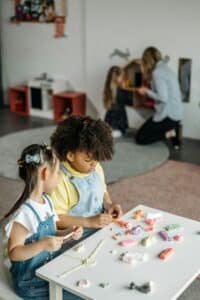
It doesn’t take much to keep a preschooler occupied. A small pouch of odds and ends can make the difference between a calm dinner out and chaos. A handful of simple items can set the stage for plenty of fun and activity to keep your little one amused all the way through dessert. Try including:
- A mini notebook
- A few crayons or twistable pencils
- Stickers or washi tape
- Wikki Stix or pipe cleaners
- Washable pre-inked stamps
- Small tubs of playdough and small animals/characters
According to the NAEYC, open-ended art and manipulative activities at the table build small-muscle control and spark creativity, which supports future writing and school readiness.
Here at Crestwood Childcare and Learning Center, we love sharing practical, parent-friendly tools to help your child learn and grow at home and on-the-go! Schedule a tour today to come meet our teachers and see our facility!

2. Conversation Games
These require almost no prep and help keep littles entertained while also encouraging connection. Research shows that mealtime conversations give children a chance to share their thoughts and build emotional closeness, helping them develop deeper family connections. These are great games to keep in your pocket for the next family gathering, long car trip, or even for a rainy day in a daycare of childcare classroom.
- Would You Rather (Holiday Edition): sledding or snow fort?
- I Spy (only things on the table).
- Gratitude Go-Round: everyone names something they’re thankful for.

3. Paper Games and Mini Challenges
Table-friendly paper activities can transform waiting into play. Here are some excellent examples that support visual-motor skills, attention, and other early childhood education concepts. Plus, they are fun!
- Menu scavenger hunt: “Find the letter S,” “Circle a number,” “Spot something green.”
- Doodle swap: You draw a squiggle, your child turns it into something.
- Dot-to-dot or simple mazes: Easy, quiet, and focus-building.
We believe learning can happen anywhere–at home, at childcare or daycare, at the grocery store and at the dining room table! Call us here at Crestwood Childcare and Learning Center, we would love to show you around and see our daily learning in action.
4. Stickers, Small Building, and Quiet Fidgets
Small toys and activities that pack up nicely are excellent tools to support self-regulation and self-amusement in busy or overstimulating environments. Daycare and early childhood education professionals will agree that overstimulated situations and preschoolers can be a recipe for stress. Packing up little items like the following and reserving them solely to be pulled out in such a situation helps keep the items engaging and unique, to help bring calm to chaos when needed.
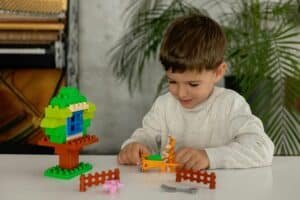
- Sticker scenes can easily be packed up for travel and also encourage storytelling and fine-motor practice.
- Mini building bricks–with or without a template or instructions! Easy play and invites creativity
- Silent fidgets such as a sipper bracelet or a Pop-it toy can help easy nervous energy.
5. Reusable Placemats and Books

Bringing a reusable coloring placemat (like this one) or an activity book (like this one) is an easy win. Children can stay engaged, talk about what they’re creating and work on their pen-holding skills! Working on numbers, letters, and counting can be an additional support to their early childhood education, all while keeping them occupied at the table!
Here at Crestwood Childcare and Learning Center we are happy to share what we are working on within our classes so you can help your child learn and grow from home, as well. Call us today to schedule a tour and ask about our daily schedules and lesson plans.
Screens on Travel Days
During long travel or unavoidable waits, screens can be helpful. Healthy Chidlren.org supports this in saying that adding movies, games or videos to your travel toolkit won’t do any harm, even if you usually keep screen time to a minimum. This is especially true if it helps to keep both child and family at a lower level of stress through the experience. Choose low-stimulating or educational shows that support quality morals, creativity, as well as reinforces the learning preschoolers are acquiring at home, daycare, or childcare. Some excellent examples are:
- Daniel tigers Neighborhood
- Little Bear
- Tumbleleaf
- Wild Kratts
- The PBS Kids App
- Kahn Academy Kids–a free resource that is both education and incredibly fun!
Peace Through The Holidays
This holiday season, with a little bit of forethought and preparation, you can create an opportunity for your preschooler to learn, connect, play, and enjoy the traveling and long waits that traditionally come with family get togethers. Instead of waiting for the crayons and coloring sheet at the restaurant or hoping that your Great Aunt’s house will hold something of amusement that isn’t breakable, pack up some engaging activities, leave them in the car, and enter this holiday season prepared for any amount of waiting. Bonus, you’re supporting familial connections and early childhood education concepts at the same time!
If you’re looking for a warm, supportive learning community for your child, we’d love to welcome you and your family to be a part of Crestwood Childcare and Learning Center. Call today and schedule a tour!
Growing in Gratitute: Thankfulness Activities for Preschoolers

Gratitude is one of the most important lessons we can teach in children, no matter where they are learning–daycare, childcare, or at home! More than simple manners, gratitude helps children pay attention to kindness, build empathy and even have and express joy. In early childhood education, parents, teachers, and caregivers alike can set the stage for thriving relationships and a joyful life through activities that nurture thankfulness. Keep reading to check out a few easy-to-implement activities that we have compiled for you encourage gratitude in the classroom or at home!
Discover how our preschool classes nurture gratitude and kindness every day at here at Crestwood Childcare and Learning Center. Schedule a tour today to meet our teachers and see our program first-hand!

Why Gratitude Matters in Early Childhood
Research shows that fostering gratitude in early childhood education helps support key factors of development such as social connection and emotional growth. According to the American Psychological Association, children who practice thankfulness show greater empathy and improved relationships (APA). Additionally, the National Association for the Education of Young Children (NAEYC) also notes that genuine gratitude grows when children learn to reflect, not just recite “thank you” (NAEYC).
In childcare and daycare environments, emphasizing and teaching gratitude helps to create classroom communities where children feel valued and supported. Here at Crestwood Childcare and Learning Center, we are very intentional with the relationships built amongst classmates and as a class. Call today and schedule a tour to see our various classrooms and watch relationships grow!
Simple Gratitude Activities for Preschoolers
 1. Gratitude Jar
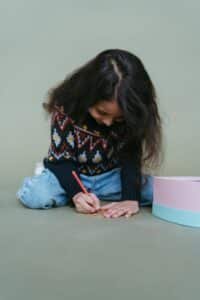
Prepare a decorate jar and slips of paper–or, for extra personality and to get the kids more involved, allow children to each decorate their own jars. Every day, ask children to write or draw something they’re thankful for on a slip of paper and add it to their/the classrooms jar. Remember, this can be anything from a favorite snack to the sunshine outside or a friend they are thankful for. At the end of every week, read aloud all of the various slips of paper! The non-profit All for Kids supports this simple ritual, finding that it helps children pause and reflect on the positives around them.
We are so grateful for the amazing staff and families we have as part of our community here at Crestwood Childcare and Learning Center. Call today to schedule a visit and see what makes our center so special!
2. Thankfulness Tree
Use a large branch to hang paper leaves from or create a wall display. Allow the children to cut out paper leaves and write or draw something they are grateful for on them. Throughout the month of November–or all year long–add these leaves to the tree. Over time, your ‘tree’ will become a visual display of thankfulness.
Here at Crestwood Childcare and Learning Center, teaching thankfulness extends well past the month of November. Call us today to chat about the different ways we help and encourage our little learners to grow and learn and to ask about our daily routines and curriculum.
 3. Gratitude Walk
Research shows that mindful noticing supports emotional regulation and appreciation. Take your daycare class (or your little one at home) on a short outdoor walk. Encourage them to use their senses—What do they see, hear, or smell that makes them happy? What would life be like without those things?
An appreciation for nature and the outdoors is important within early childhood education! Call us up here at Crestwood Childcare and Learning Center to come for a visit and tour our engaging classrooms, but also to see our lovely outdoor play areas, as well!
4. Thank-You Cards for Helpers
Children can draw cards for classroom aides, military members, local firefighters, cafeteria workers, parents, the list could go on and on. In writing and creating such cards, children are encouraged to recognize the effort of others and doing so will help strengthen the bond of the community.
Come see how we build gratitude into our everyday life here at Crestwood Childcare and Learning Center!

5. “Roses and Thorns” Reflection
Building gratitude will help children not only when things are good, but when life throws challenge their way, as well. The Akron Children’s Hospital has found that a ‘rose and thorn’ activity helps children see the things they can be grateful for, even through the challenges. This is a very simple activity that is easily incorporated into circle time, or even as a conversation in the car on the way home from daycare, childcare, or the grocery store! Invite each child to share a “rose” (a positive moment) and a “thorn” (something hard). Then follow up with the question: “What’s one thing you’re thankful for today?”
Building emotional resilience will help support children well past their early childhood education and into their adult life, as well. Come for a tour with us here at Crestwood Childcare and Learning Center! We would love to share our love for learning with you and your family!
Building an Attitude of Gratitude
Gratitude grows best when practiced in community. Working together as a classroom or family to share thankful thoughts and reflect together, children will grow in empathy, communication, as well as in their feelings of support and belonging. In early childhood education, gratitude isn’t just a holiday theme—it’s a year-round skill for life!
Call us today here at Crestwood Childcare and Learning Center to see what we have scheduled for this month of Thanksgiving and to hear about the ways our amazing educators foster an attitude of gratitude for themselves, their students, and their classrooms every day!
Frosty Playtime: The Benefits of Cold Weather Play

Bundle Up and Get Outside!
As temperatures drop, the draw to stay in where it is warm and cozy goes up. Following a child around while they play in the cold does not sound super appealing and we’ve heard that being out in the cold will make children sick…right? Wrong! With a little effort and an extra layer or two, wintertime can bring an opportunity to actually boost children’s health, their sleep, and more! In this article we will address the myth that cold leads to sickness and look at many of the research-backed benefits of cold weather play.
Here at Crestwood Childcare and Learning Center we make a point to go outside in every season! Come by for a visit and check out our engaging outdoor play areas and playgrounds!

Debunking Myths
It’s a common myth that cold weather causes colds—but that’s not true. Viruses cause illness, not the temperature. However, wearing inappropriate clothing for the weather and thus being cold for too long can make the body work harder to stay warm, which may briefly lower immune defenses. Nasal passages are also susceptible to the dry winter air, irritating them and making it easier for germs to find a foot hold when present. So, bundle up and grab some nose spray and let’s look at the benefits behind getting outside this winter season!
 1) Powering Healthy Bodies
Hot or cold, outside time and physical activity is always going to be a win! At preschool, childcare, daycare, or at home, outdoor play is essential for not just early childhood education, but for all! The CDC notes that regular physical activity in childhood improves muscular fitness, bone strength, and even thinking skills. Whether kids are running, climbing, playing tag or shoveling snow, the movement and activity help them build strong muscles, bodies, and boosts their mood!
Here at Crestwood Childcare and Learning Center, we keep our students active all year long! Schedule a tour and see how our teachers encourage safe and fun movement even through the snowy months!
2) It Steadies Sleep and Routines
While we specifically head to bed when the sun has gone down, it actually plays a major role in our sleep! Exposing our eyes and body to the daylight helps set circadian rhythms — directly impacting sleep quality. Research shows that children who spend more time outdoors fall asleep faster and sleep longer. Because sleep is so essential for healing and growth, especially within early childhood education, outside time is an absolute must!
Here at Crestwood Childcare and Learning Center, we make it a point to bundle up and head outside as long as weather permits. Call us today to ask about our outdoor playtime schedules and how we handle the extreme cold or heat!
3) It Lifts Mood and Sharpens Attention
Nature exposure is powerful! The American Academy of Pediatrics has found that outdoor play can help support developmental milestones, strong mental health and quality relationship building. Separately, a study from the University of Illinois found that children who spend more time in green spaces have improved attention and self-discipline.
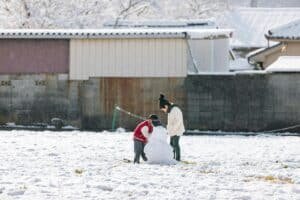
While the trees may be bare, the opportunity for play, exploration, and amazement remains! From sparkling frost to animal tracks in the snow, winter offers a quiet beauty that engages a child’s senses in its own special way. Schedule a tour with us here at Crestwood Childcare and Learning Center to see our amazing outdoor play areas and to chat about how we utilize the outdoors in our learning every day!

4) It Builds Resilience and Confidence
Cold-weather play offers manageable challenges such as walking in the snow, climbing gentle hills, or sliding safely. Experts in early childhood education call this “risky play,” and when guided or supervised by caring adults, be it at home, in childcare or daycare, it builds resilience, problem-solving, coordination, and confidence. A comprehensive review from the Canadian Paediatric Society agrees. They found a good deal of evidence that risky play supports children’s physical, mental and social-emotional development, including better self-esteem, concentration and resilience.
At Crestwood Childcare and Learning Center we don’t mind when Jack Frost brings a little cold and adds some ice to our windows! Call us today to schedule a tour and join in the winter fun!
 Bundle Up and Head Out
Daycare, childcare, home…no matter where your little one spends their days, staying inside for 3-6 months simply isn’t an option–especially with a rambunctious young child. Instead of hiding from the cold, bundle up, grab some cocoa and embrace it! The outdoor time will do you and your preschooler some good in supporting physical health, sleep, moods and growth!
Schedule a tour here at Crestwood Childcare and Learning Center to see how we encourage our students to learn and grow through every season!
A Halloween of Treats and No Tricks
Halloween Safety Tips for Your Preschooler

Halloween is a festive night of costumers, candy, and the thrill of being up past bedtime and after dark! While trick or treating and festivities can be a bowl of fun, especially with some simple safety tools ready to rock for the big night. Below are some easy-to-implement tips that can keep every little ghost and gummy bear in your crew safe.
We love getting into spooky season here at Crestwood Childcare and Learning Center. Schedule a tour to come by and see how we get in the spirit and to ask about the fun Fall plans we have scheduled for our students and their families!
1) See and Be Seen

The safest costume is one that allows your little on to see well and move freely in. Face paint or makeup over a full-face mask will keep things fun without impairing vision–the bonus being that you don’t have to keep track of a mask all night.
Making sure your kids can see well is huge, but making sure they can be seen is monumental. It’s amazing how quickly visibility goes down once the sun sets. According to Safe Kids Worldwide, children are more than twice as likely to be struck by a car on Halloween than any other night of the year. To help keep your little one visible, add reflective tape to their costume or even let them wear glow stick bracelets and necklaces. This can increase the fun AND keep them visible while hopping from house to house.
Safety is our number one priority here at Crestwood Childcare and Learning Center–and it should be at any reputable day care, childcare, or preschool program. Come for a tour here at CCLC and see our classrooms, outdoor play areas, and in order to ask how we pull out all of the stops when it comes to your child’s safety.
2) Candy Check!

Before tiny hands dig into bags and start devouring their spoils, do a candy check to discard any unwrapped, torn, or questionable pieces. This is a perfect time for parents of children with allergies to inspect labels and sort out any problem items. For toddlers, as always, be aware of small, hard candies that could pose a choking hazard. Halloween parties in a daycare of childcare classroom are exciting and will be mindful of children’s allergies–making it a lovely option for celebrating the holiday.
A pro tip from the Standford Children’s Health suggests eating a healthy meal or snack to keep kids satisfied while trick-or-treating and to dissuade them from digging in before candy has been inspected.
Call today to ask about our allergen policy and to get a peak at our school lunch menu! We are happy to share what we have cooking!
3) Festive Alternative Plans

Halloween does not need to be an all-nighter hitting up every house in the neighborhood. For little ones, choose a comfortable, warm costume and entertain the idea of only visiting a few houses or even having a peaceful yet, festive, night at home. A mini costume parade with friends and family, story time and themed sensory play can be excellent examples of gentle excitement for the smaller crowd.
According to a 2024 study published in the National Library of Medicine, consistent daily routines were linked to fewer behavior problems and stronger emotional regulation in young children. While making an exception on bedtime and routines can be fine every once in a while, it helps to remember that small children thrive with routine and predictability, and Halloween festivities can end at 7 PM instead of 11 PM.
Here at Crestwood Childcare and Learning Center we know that routines set the foundation for a productive day at daycare, preschool, childcare, or, anywhere with children. Call us today and schedule a tour! We would love to share our daily schedule with you and to introduce you to our lovely early childhood education professionals!
4) High Tech Gear
Air tags, Apple watches and other trackable items can easily be worn by children in the case of a Halloween-night emergency. Especially as visibility goes down, having a fail safe for locating a child might feel like over-protectiveness–until you need to use it and it’s suddenly the best decision you’ve ever made. The Washington Post has found that many parents are choosing to use Air Tags on their child’s person while in a busier public setting and that this is actually a secondary use of the product per the manufacturer. Some shoes are now built to have a small place to insert air tags under the sole for ease and ensuring it actually stays on.
Peace of mind that your child is safe and well cared for is important–whether your child is attending daycare, childcare, preschool, or a playdate at a neighbor’s house. Call us up here at Crestwood Childcare and Learning Center and see how we combine thoughtful supervision, up-to-date safety practices, and parent partnerships to create secure spaces for children to explore, learn, and thrive.

No Tricks, Just Treats for a Safe and Spooky Night
Halloween doesn’t have to be frightful to be filled with fun! By incorporating a few family rules and adding a couple glowsticks here and there, you can turn a spooky night into one of laughter, learning, and memories that last a lifetime.
At Crestwood Childcare and Learning Center, we are very intentional with child safety—whether it’s during classroom activities, playground adventures, or daily drop off and pickup. We are here to partner with your family not just to make Halloween a safe and candy-filled night, but to ensure that every day is wrapped in safety to give your little one a secure place to learn and grow. Schedule a tour today and let’s chat about how we can support your family to give your child a glowing early childhood education!
Wishing you a happy, safe, and treat filled Halloween from all of us here at CCLC!
Nurturing Toddler Independence with Ease
Simple Steps to Help Little Hands Do Big Things

“I do it!” The phrase shouted out at helpful parents, teachers, daycare and childcare workers alike from the grumpy toddler who absolutely thinks they can zip their coat themselves. 15 minutes and an entire emotional roller coaster later, they are finally happily zipped and ready to go outside.
Helping toddlers grow independent doesn’t have to be a milestone of frustration for all, but it can be an opportunity for bonding, emotional growth and confidence building. In support of this, research shows that when adults support autonomy, children develop stronger self-regulation and curiosity (NAEYC, Child Mind Institute). We have compiled some helpful, easy, researched approaches for helping build your toddlers confidence and independence. Without your tears or theirs!
At Crestwood Childcare and Learning Center, we cultivate opportunities for toddlers to practice their independence every day. Schedule a tour today to see how our childcare and early childhood education program nurtures confident, capable kids from the very first step.
 1. Set the Environment up for Success
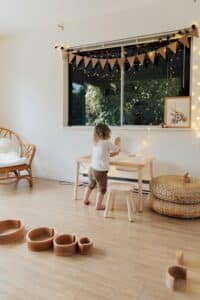
Preparing spaces to make them child-friendly can go a long way. When preschool classrooms or homes have lower shelves, bins with picture labels, and reachable hooks a little on has the opportunity to practice decision-making and self-care, naturally (Illinois Early Learning). Research shows that environments designed for independence lead to stronger confidence and early executive function. In providing toddlers with an environment that sets them up for success, they can more easily learn the skills and expectations set for them, especially if they aren’t wasting half the time overcoming giant obstacles –like the fact that the coat hook is three feet higher than their little outstretched arm.
Come tour our classrooms and see how every shelf, hook, and child-sized space at Crestwood Childcare and Learning Center is intentionally designed to foster independence in our students.
2. Offer Limited but Real Choices
Choice is the heartbeat of autonomy. However, phrasing is everything and with a headstrong toddler you have to choose your words wisely. Instead of asking, “What do you want to wear?” try “Red shirt or blue shirt?”
This small shift in verbiage empowers toddlers without overwhelming them, building early decision-making skills that foster long-term self-control (NAEYC). Controlled options allow toddlers to have some autonomy while allowing adults to retain some control of the outcome.
Our lovely educators here at Crestwood Childcare and Learning Center practice these gentle choice-making strategies every day. Schedule a visit to watch how we guide toddlers to think for themselves while still maintaining classroom management.

3. Invite Them to Help with Everyday Tasks
It might be quicker to pour the milk yourself, but letting your toddler try first is priceless. Remember, there’s no need to cry over spilled milk!
The Child Mind Institute shares studies that show early, meaningful responsibility—such as setting napkins or picking up toys—boosts persistence and pride. While it does take an extra dose of patience (and maybe some strong tea or coffee), allowing toddlers to tackle slightly challenging tasks helps strengthen their brains’ problem-solving skills and as a bonus, is a major confidence boost!
Here at Crestwood Childcare and Learning Center, we know that a child’s early childhood education goes so far beyond academics. We intentionally work with our students to help them grow their independence and overall development that will serve them well later in life. Come for a tour today to see this learning and independence in action!

4. Allow Small Frustrations to Grow Big Skills
When a puzzle piece doesn’t fit, the pause before you step in is powerful.
Supporting perseverance (“Try turning it this way”) helps toddlers build resilience and emotional regulation (Illinois Early Learning). Whether you are a preschool teacher, daycare of childcare worker, parent, caregiver, or even simply an adult bystander…watching, waiting, and encouraging can be so difficult. All might wait from the sidelines with bated breath for the opportunity to pop in and help but allowing the struggle will strengthen a child’s patience and grit–setting them up for future resilience and strength.
Challenges can become steppingstones to lifelong confidence for your little one! At Crestwood Childcare and Learning Center, our early childhood educators are trained to guide and coach—not simply step in and rescue. Call us today to schedule a visit and chat with our teachers about the proven strategies they use every day to nurture independence in the classroom.

Growing Confidence, One Little Victory at a Time
Encouraging independence doesn’t mean leaving toddlers to fend for themselves. Nurturing a child’s independence happens one little step at a time, through meaningful childcare, daycare, and early childhood education experiences that invite children to try, stumble, and succeed in a safe and supportive environment. By setting up their world for success, offering intentional choices, and supporting (rather than rescuing) them through the frustrations, you can guide your toddler toward an independence that can last a lifetime!
At Crestwood Childcare and Learning Center, we would love to partner with your family and set your toddler up to grow into a confident and capable learner. Schedule a visit today to take a tour of our classrooms, meet out teachers and see the caring guidance we give to each of our students to build their confidence and help them flourish!
Big Feelings, Little Body: The Root Behind Toddler Tantrums
A Not-So-Tiny Storm

There is no fury like a toddler who was given the ‘wrong’ cup. Every parent, caregiver, daycare teacher or early childhood educator knows that while toddlers might be tiny, their tantrums are not. While this can be a frustrating experience and some days can feel like you are walking on eggshells, tantrums are actually an important part of early childhood education. As children and adults navigate the meltdown together, these little ones are slowly learning to manage their feelings–a skill that sets them up for success later in life. We can’t have a 20-something year old kicking and screaming on the floor because the grocery store is out of their favorite brand of orange juice. To help parents and caregivers respond constructively and calmly, let’s explore why toddlers have these tantrums in the first place.
Here at Crestwood Childcare and Learning Center, we understand the ups and downs of toddlerhood. Call today to schedule a tour and see how our lovely educators support the emotional growth of their students.
A Look at the Science
 Tantrums aren’t simply “bad behavior” or indicative of an adult’s ability to teach or parent–so don’t go heaping on the embarrassment and guilt for the meltdown your little one had in the grocery store the other day. Tantrums are simply a normal developmental stage. Research from Zero to Three explains that toddlers’ brains are still developing the skills needed for self-control and communication. The emotional center of the brain matures much earlier than the logical, reasoning part, which means toddlers feel huge emotions they can’t yet fully manage or understand. Their world does feel like it’s over because you cut the sandwich wrong and yes they believe it will taste different in triangles vs. rectangles.
Moments of frustration are an opportunity to teach and guide toddlers with patience and care. The American Academy of Pediatrics supports the verbalization of feelings and setting up proper coping strategies that will, over time, lay the proper groundwork for better emotional management from early childhood education and beyond.
Tantrums are a part of toddler life, and here at Crestwood Childcare and Learning Center we are more than happy to come alongside your family and help your little one grow and learn. Call us up here to schedule a tour and chat with our teachers about their strategies for guiding their students through tantrums.

Common Triggers for Toddler Tantrums
On top of their brain still being in development mode, there are certain triggers that make tantrums a little closer to the surface. By keeping an eye on these very predictable causes, many tantrums can be avoided before they even start.
-
Hunger or fatigue – According to the CDC, a tired or hungry toddler is inclined to struggle with keeping their cool. As is a hungry or tired adult, honestly. Hunger or tiredness are not a great recipe for patience.
-
Frustration – When a child can’t do something independently, like putting on their own shoes, it can spark tears. They are growing in their independence–which is a great thing!–but when “I do it” becomes “I can’t do it”, sometimes it’s too much for them to process or handle.
-
Overstimulation – Too much noise, light, or activity can overwhelm a little one’s developing nervous system, says the NAEYC.
-
Desire for independence – Toddlers love saying “No!” because it’s how they test boundaries and assert control. It’s adorable how such a tiny person can be so adamant.
We design our routines to prevent many tantrums before they happen! Visit us here at Crestwood Childcare and Learning Center and ask about our daily rhythm from classroom to classroom.
Supporting Toddlers Through Tantrums
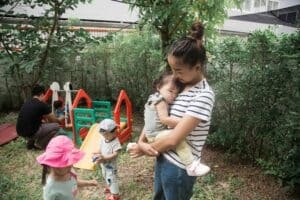
Parents, daycare and childcare workers and early childhood education teachers can work together to manage tantrums in healthy, constructive ways:
-
Stay calm – Children look to adults for cues on how to feel and will easily match your energy. Staying calm encourages your child to be calm, too.
-
Validate feelings – Saying “I see you’re angry” helps toddlers feel understood as well as gives them vocabulary to put to their feelings.
-
Offer choices – Simple choices (“Do you want the blue cup or the green cup?”) can help reduce power struggles.
-
Praise positive behavior – Celebrate when children use the coping skills you’ve taught them instead of screaming or melting down. Your praise goes a long way!
Here at Crestwood Childcare and Learning Center we are happy to partner with parents and create consistent strategies that work both at home and in the classroom. Schedule a tour today and let’s work together to support your child’s big feelings!

Tantrums are for Teaching
Tantrums may be loud, messy, and exhausting, but they’re also an opportunity for growth. Experts at The Child Mind Institute explain that every tantrum is a chance to practice self-soothing, empathy, and problem-solving skills. With patience, guidance, support from both parents and teachers (and potentially an extra cup of coffee for the adults) toddlers can learn to navigate their emotions in healthy ways. Every meltdown can be a step toward self-control.
Interested in learning how our lovely educators here at Crestwood Childcare and Learning Center supports children through every stage of growth? Call us today to schedule a tour and both ask our early childhood education teachers how they manage tantrums in their classroom–we are happy to share our experience and expertise!