Quiet Time Activities for Preschoolers

Rest is a major component of overall health and for a little growing and fast-moving body, naps and rest mid-day can make all the difference. Whether your preschooler attends childcare, daycare, or spends their days at home, building quiet time into your daily routine is essential for recharging the batteries of little ones and their caregivers alike. In a preschooler’s early childhood education journey quiet time also gives them the space to relax, reflect, and learn in ways that noisy play just can’t.
According to the American Academy of Pediatrics (AAP), downtime helps children process the day’s events, regulate emotions, and improve focus later in learning activities. Quiet rest time does not end with the last nap, but can go on as children age with a solid routine and some enjoyable and brain-boosting activities these little learners will love. Read more for a list of some excellent ideas that will help keep quiet time, well, quiet.
Down time is part of our learning time here at Crestwood Childcare and Learning Center. Rest gives children the recharge they need to continue building on their early childhood education skills. Not to mention it can help keep afternoon grumps away. Call today to ask about our daily schedule!
1. Puzzle Power
Puzzles are a perfect quiet time activity—engaging a preschooler’s brain without revving them up at the same time. Puzzles support problem-solving skills, visual-spatial reasoning, and concentration (Michigan State University Extension).
2. Book Nook Bliss
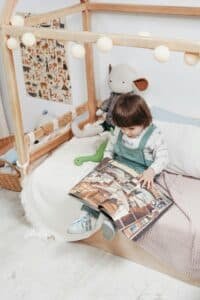
Imagine it now; a cozy corner, a pile of picture books and a comfy pillow. What more do you need as a preschooler during quiet time? Per the Reading Rockets (and early childhood educator everywhere), reading boosts vocabulary, listening skills, and imagination; making reading a building block not just for early education, but for future learning as a whole!
We LOVE books here at Crestwood Childcare and Learning Center. Reading is part of our everyday life and each of our classrooms has a great library of books. Schedule a tour today and come see what we’d recommend for your preschoolers “to be read” list.
3. Simple Sensory Play
Sensory bins for the win! Sensory play does not need to be a box of sand suddenly exploded on the carpet, rather, sensory play can be a quiet time of formative fun. According to Zero to Three, simple options like nature items, playdough, or water beads give children a calming, tactile outlet. Additionally, keeping these items in bins with lids keeps them ready-to-go while containing the mess. An inexpensive vinyl tablecloth strategically placed underneath the play area had make cleanup an easy breezy affair, as well!

4. Sticker Play
It is so simple: blank paper and a sheet of stickers. BAM. Instant fun! Ask your preschooler to be creative and make a scene of a story, either one they make up or a well-loved favorite. This quiet activity encourages storytelling, memory, fine motor skills as well as boosts creativity! (Pathways.org).
5. Coloring Calm
Coloring is a classic quiet time staple—and for good reason. Not only is it an incredibly peaceful activity, but it encourages focus, fine motor control, and creative expression. Coloring can take many forms, as well: crayons, colored pencils, stencils, watercolors, coloring pages, and more!
Art is an important facet of early childhood education and we here at Crestwood Childcare and Learning Center believe that children should have an early exposure to flexing their artistic muscles. Come by for a tour to see our students’ lovely work–proudly displayed on the bulletin boards, walls, and even hanging from the ceiling!

6. Quiet Time Audiobooks
Audiobooks are exciting, screen-free and independent options for quiet time. According to Common Sense Media, audiobooks develop listening skills and introduce new vocabulary while giving children a restful break from active play. A Yoto Player can be an excellent tool for your home, preschool, or daycare–allowing children the autonomy to choose the book or music they would like and sit and listen for hours.

Every opportunity is a chance to learn. Our classrooms are chalk-full of great toys, activities, and ran by lovely early childhood educators to help give your little one a great start! Call today to check on our openings and to schedule a tour.
7. Independent Play with Open-Ended Toys
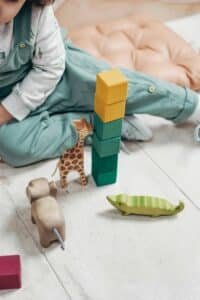
Quiet time doesn’t necessarily have to be silent time. Open-ended toys such as magnetic tiles, blocks, or even toy animals can give preschoolers boundless opportunity to quietly create on their own.
 Quiet Time is Important
Quiet time is not a pause button for the day but rather an important piece of early childhood education. Studies in the Journal of Applied Developmental Psychology show that calm, independent activities build resilience, independence, and the capacity for sustained attention. Let’s be frank, quiet time gives teachers and parents alike a moment to recharge to help them be ready to face the day bright eyed and bushy tailed.
Whether at home, in daycare, or a childcare center, quiet time is more than just a nap alternative. With thoughtful and engaging activities, quiet time can be a restful moment to support growing little bodies and minds!
Here at Crestwood Childcare and Learning Center we know that independent play, structured learning, outside time, and even rest are all part of learning! We want to support our students as they grow and are happy to offer nap/rest time as a part of our day. Schedule a tour to come by and see learning in action!