
Readiness is the key to success…and fewer messes
Potty Training is a huge milestone within early childhood education…and oftentimes one of the most daunting. It is right up there with first steps, firsts words, and those first crayon murals on the living room wall.
When you look at your toddler with their cute little voice, strong opinions and short chunky legs, it’s easy to see how young they are and think “they are waaay too little to be thinking about ditching diapers!” So, how do you know when it’s the right time to start?
Honestly, there is no hard and fast time that you need to start the transition away from diapers. Every child is different, and readiness is about development rather than a date on the calendar.
Let’s take a look at some of the developmental ques that would indicate readiness in the littles in your care—as a parent, early childhood educator, or childcare provider.
We would love to support you and your little one on their potty-training journey here at Crestwood Childcare and Learning Center. Come for a visit to meet our teachers and see our classrooms and facilities. Let’s chat about how we can come alongside and support your family in the adventure of early childhood education.

> Staying Dry for Longer Timeframes
When you begin to notice that your little one’s diaper is staying dry for 2 or more hours a day—or that they wake up from naps dry—it is a sign that their bladder muscles are maturing. According to the American Academy of Pediatrics (AAP), this is one of the early physical signs of potty readiness.
Here at Crestwood Childcare and Learning Center we are happy to keep track of and share diaper changes with you in order to test for this form of readiness. Schedule a tour today and we will be happy to share the ways we support families in potty training their preschoolers.
 > Showing Interest in the Potty
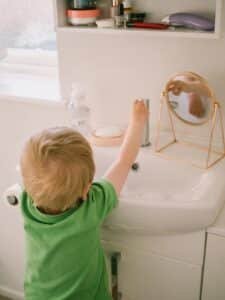
As parents, we all know that children follow you everywhere—including the potty. Does your little one watch you go to the bathroom? Or have you noticed a curiosity about flushing, toilet paper, or even their older sibling’s routine? Your child is not being nosy; they are demonstrating a developmentally appropriate curiosity. Observational learning is a pivotal part of early childhood education—and not just with potty training! (source)
It’s easy to see how children learn through observing within all settings—and especially in a daycare or childcare. Building towers, certain phrases, and even trying new foods, children are sponges! Schedule a tour here at Crestwood Childcare and Learning Center today and see learning in action!
> Communicating Needs
Within childcare settings, teachers and caregivers often look for language milestones to signal potty training readiness. CDC Developmental Milestones Whether your toddler has begun to say “pee”, “poop” or even give you the look communication plays a huge role in indicating readiness. A child that can share that they feel the need to go to the bathroom—or even that they just went—is already on their way to potty training!
Here at CCLC we encourage communication skills from the beginning. Come for a tour and ask us our strategies to help our students hone this essential skill.

> Discomfort in Dirty Diapers
If your preschooler seems to pull on their diaper, ask to be changed, or in general seems to be annoyed when they are wet or dirty, congratulations—they are developing body awareness! While being asked to change a diaper for the fifth time within the hour can be frustrating, it is an excellent precursor to potty training interest. When your little one pulls at their diaper, asks to be changed, or seems annoyed when they’re wet or dirty, congratulations—they’re developing body awareness! This is often a precursor to wanting to use the toilet. (source)
> Understanding Simple Instructions
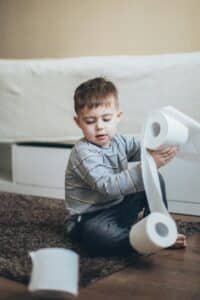
Can your preschooler follow one or two step directions such as “Let’s go to the potty?” or “Pull up your pants” –even if they might decide not to because…toddlers. The ability to follow basic instructions is a foundational piece of successful potty training as well as early childhood learning benchmarks– showing readiness from a cognitive development standpoint. NIH: Learning During Early Childhood Additionally, if children can manage their clothing, they will have an easier go at navigating potty time. (source)
Children are learning and growing in so many ways; Intellectually, emotionally, physically…and the list goes on! Here at Crestwood Childcare and Learning Center we teach and support children as they grow in every area! Call today to schedule a tour and let us know how we can come alongside your family!
> Predictable Bowel Movements
Consistency helps establish routines. A consistent routine or (or consistent anything) plays a huge role with learning retention for children within early childhood education. Does your child have a bowel movement around the same time every day? You are at a major advantage: BAM. Schedule set! (source)
> Bonus: They Want to Help Clean Up
Toddlers interested in helping clean up potty accidents, throw away diapers, or even wipe themselves might be signaling a desire to graduate to “big kid” habits!
Final Flush: Potty Training with Patience

Potty training is a journey—it takes time and will likely be different for every child. Beginning that journey when your child begins to show readiness signs (as opposed to a date on the calendar) the road to potty trained tends to be smoother (and less…soggy). Let us know how we can help here at Crestwood Childcare and Learning Center. Our experienced educators are here to partner with you and your family to support your little one’s readiness and potty-training routine.
Just remember to keep your plan firmly rooted in patience, praise, and perhaps a handful of spare pants.